Brief About CCARDESA
Outline Background Vision, Mission and Goal Alignment of MTOP to key strategies MTOP Thematic areas CCARDESA partners and stakeholders Current projects coordinated by CCARDESA Efforts to improve the resilience of food systems
1st Quarter CCARDESA Newsletter 2024
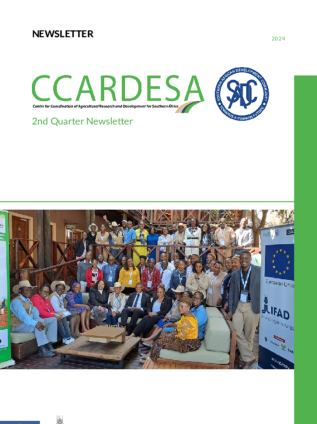
2nd Quarter CCARDESA Newsletter 2024
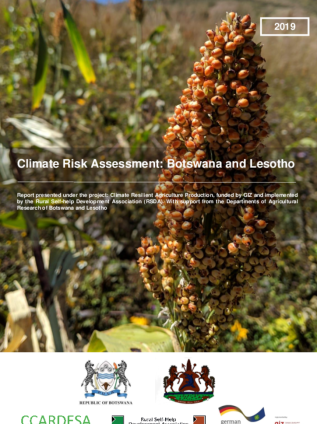
The Climate Resilient Agriculture Production Programme is a collaboration between the Departments of Agricultural Research in Lesotho and Botswana to undertake climate risk assessment of sustainable agriculture and climate-smart agriculture (CSA) best practices in both countries, using the sorghum value chain as a reference case where necessary.
Restoring Landscapes and Livelihoods for Climate Resilience in Southern Africa’s Rangelands
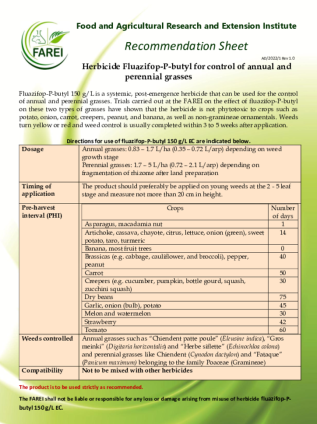
This leaflet is about use of Herbicide Fluazifop-P-butyl for control of annual and perennial grasses after trials carried out by FAREI, Mauritius.
Food and Agricultural Research and Extension Institute, Reduit, Mauritius
Contact name
Contact phone
+2304334378
Contact institution
Food and Agricultural Research and Extension Institute
Ce document indique les itinéraires techniques à suivre pour la culture de maïs.
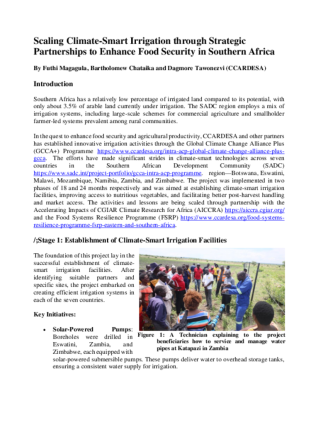
News artcile on Irrgation
Magagula, F et al., Scaling Climate-Smart Irrigation through Strategic Partnerships to Enhance Food Security in Southern AfricaScaling Climate-Smart Irrigation through Strategic Partnerships to Enhance Food Security in Southern Africa., pg. 4,Gaborone-Botswana
The Climate Resilient Agriculture Production Programme is a collaboration between the Departments of Agricultural Research in Lesotho and Botswana to undertake a climate risk assessment (previously vulnerability assessment) of sustainable agriculture and climate-smart agriculture (CSA) best practice production in the countries, using the Sorghum value chain as a reference case where necessary.
The call for participatory approaches, including planning and implementation of crossbreeding activities in Africa, emanates from the many failed experiences in the crossbreeding sector, some of these have been directly linked with the absence or weak participation of stakeholders in the crossbreeding and associated efforts.