Adapting to Climate Change Through the Improvement of Traditional Crops and Livestock Farming in Namibia

Date of Publication
Dec 01, 2011
Description/Abstract

Namibia is one of the most arid countries south of the Sahara. Around 70 % of the population lives in rural areas. Fishery, tourism and agriculture form the basis of the country's economy. However, the economy is held back by low demand for domestic products as well as high transport costs and competition with products from South Africa. Climatic variability is a common phenomenon in Namibia, exhibited by persistent droughts, and unpredictable and variable rainfall and temperatures. Land degradation - soil erosion, bush encroachment, deforestation - and desertification are increasingly a threat to agricultural productivity. Climate change reports predict an increase in temperature and a lower amount of rainfall. Changing patterns and intensity of rainfall are likely to increase the rate of soil erosion, affecting crop production and livestock. An increased incidence and severity of extreme weather events such as flooding will worsen soil erosion and destroy crops. Climate change will affect the agricultural yield directly through changes in temperature and precipitation, and indirectly through changes in soil quality, pests, and diseases. In response this project aims at enhancing the adaptive capacities of farmers, pastoralists and natural resource managers to climate change in agricultural and pastoral systems. The project is working to develop and pilot a range of effective coping mechanisms for the reduction of the farmers' and pastoralists' vulnerability to climate change and variability. The following coping mechanisms were chosen for the project intervention: Improved seeds, Aquaculture, Livestock, Rainwater harvesting, Conservation agriculture, Drip irrigation, Buffalo grass. As target group 500 farming households were chosen. 

Author or Institution as Author
Jessica Troni
Institution
United Nations Development Programme (UNDP)
Language
Resource Type
Citation

Jessica Troni , 2011.  Adapting to climate change through the improvement of traditional crops and livestock farming in Namibia.

Growth response of selected taro (Colocasia esculenta) landraces to water stress

Date of Publication
Oct 01, 2013
Description/Abstract

No information is available on responses of South African taro landraces to water stress. The objective of this study was to evaluate the responses, and mechanisms thereof, of taro to water stress under controlled and field conditions. Taro landraces were collected from rural areas in KwaZulu-Natal, South Africa. A pot trial was planted in tunnels at the University of KwaZulu-Natal with two factors: three landraces and water stress (NS – no stress, IS – intermittent stress and TS – terminal stress), replicated six times. For NS, soil water content (SWC) was maintained at 75% field capacity (FC). IS involved watering pots to 75% FC during crop establishment, and allowing SWC to deplete to 30% FC during the vegetative stage, before returning to 75% until harvest maturity. For TS, SWC was maintained at 30% FC for the entire growing period. Field trials were planted in October 2010, with irrigation (full irrigation versus rainfed) as a main factor and landrace type as sub-factor, replicated three times. SWC was monitored weekly. Emergence, plant height, leaf number, leaf area, LAI, vegetative growth index (VGI) and stomatal conductance (SC) were determined weekly. Results from both pot and field trials showed that taro landraces were slow to emerge (~49 days). There were significant differences (P<0.001) between landraces with respect to final emergence. Taro growth (plant height, leaf number and leaf area), for both trials, was shown to be significantly (P<0.05) reduced by water stress. Under field conditions, SC, LAI and VGI were significantly (P<0.05) lower under rainfed conditions compared with irrigated conditions. It is concluded that emergence and vegetative growth parameters of KwaZulu-Natal taro landraces are sensitive to water stress. Data from this study will be used to calibrate AquaCrop and presented as a possible option to manage taro under dryland and irrigated conditions in the warm subtropical areas of South Africa.

Author or Institution as Author
T. Mabhaudhi
Co-authors

A.T. Modi, Y.G. Beletse

Language
Category
Resource Type

Agronomic assessment of a taro-bambara intercrop under rainfed conditions

Date of Publication
Oct 01, 2013
Description/Abstract

Historically, traditional cropping systems are based on diversification, thus making a significant contribution to food security for the household. Intercropping may offer farmers the opportunity to mimic this diversity. The aim of this study was to evaluate the productivity of a taro-bambara intercrop. The intercrop combinations were 1:1 and 1:2, compared with taro and bambara sole crops. Growth parameters and yield components were determined separately for each crop. Thereafter, land equivalent ratio (LER) was calculated to evaluate the productivity of the intercrop. Plant height of taro, as the main crop, was not significantly affected by intercropping. However, leaf number was significantly affected (P<0.001). Intercropping taro resulted in reduced leaf number compared with the sole crop; leaf number in response to the 1:2 intercrop was significantly lower than that of 1:1 intercrop. Bambara growth was significantly (P<0.05) affected by intercropping in that plants were taller and had more leaves when intercropped with taro. Taro yield was not significantly affected by intercropping, although yield generally decreased under intercropping compared with the sole crop. Bambara yield was also not significantly affected by intercropping. The LER showed that intercropping was more productive than sole cropping. The 1:1 intercrop had a LER of 1.71 compared with 1.36 for the 1:2 intercrop. It is concluded that although intercropping had variable effects on the growth of both taro and bambara, there was an agronomic advantage to intercropping.

Author or Institution as Author
T. Mabhaudhi
Co-authors

A.T. Modi, Y.G. Beletse

Language
Category
Resource Type

Job advertisement - internal auditor

Type
File
Date of Publication
Jun 01, 2017
Description/Abstract

The CCARDESA Secretariat wishes to invite applications from qualified and competent candidates who are nationals of the SADC member countries to fill the position of Internal Auditor.

Author or Institution as Author
CCARDESA
Institution
CCARDESA
Language
Resource Type

Climate Smart Agriculture Conference Report, Johannesburg, South Africa, 2016

Type
File
Date of Publication
Sep 01, 2016
Description/Abstract

The main aim of the Conference was to have a dialogue on matters relating to climate change as it affects agriculture in Southern Africa, to share lessons and progress made. The first part of the conference dealt with presentations from a number of countries in Southern Africa on their experiences and coping mechanisms, and this was followed by a session primarily dedicated to South African experiences.

Author or Institution as Author
CCARDESA
Institution
CCARDESA
Language
Resource Type
Citation

Podisi, B. 2016. Climate Smart Agriculture Conference Report, CCARDESA, Johannesburg, South Africa

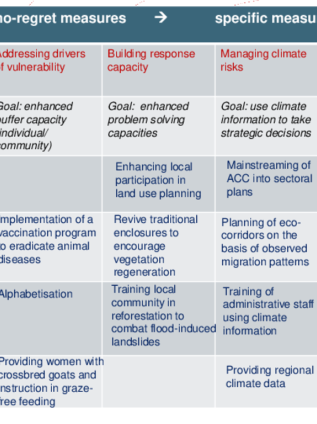
Tackling Climate Change in Agriculture: Approaches to adaptation in the SADC region (proceedings report)

Type
File
Date of Publication
Oct 01, 2016
Description/Abstract

This report presents the proceedings of the Climate Proofing and CSA Training in Cape Town in October 2016.

Author or Institution as Author
CCARDESA
Institution
CCARDESA
Language
Resource Type

Calibration of AquaCrop Model to predict water requirements of African vegetables

Date of Publication
Oct 01, 2013
Description/Abstract

AquaCrop is a crop model that simulates yield response to water developed by FAO and is appropriate to consider effects where water is the limiting factor for crop production. AquaCrop was calibrated for amaranthus (Amaranthus cruentus L. ex Arusha), a leafy vegetable, and taro (Colocasia esculenta (L.) Schott.), a wetland perennial, with an edible starchy corm as a tuber crop. The weather datasets were obtained from the climate database at Agricultural Research Council-Institute of Soil, Climate and Water in Pretoria for specific sites and years of the trials. The first step in the model is to select the correct type of crop, create a new crop and name it. Observed soil parameters from the experimental sites were used to create soil files in AquaCrop; the model is sensitive to amount of water available in the soil between field capacity and permanent wilting point. The crop parameters under optimal water availability were adjusted according to observations from field trials conducted for each crop. The first parameter checked was canopy cover, representing the expansion of the leaf canopy under non-limiting conditions, where the maximum value, CCx, (90% for amaranthus and 78% for taro) and the time take to reach CCx were needed. The total length of the cropping season should be checked and also time to the start of senescence. However, for the leafy vegetable this was not necessary as the crop was harvested while the leaves were green. The effect of water stress must be included via the Ks factor for water stress according to stomatal closure at a specific soil water availability, as measured in the field trials. The water productivity normalised for ETo and CO2 concentration (32 g m-2 for amaranthus and 15 g m-2 for taro) was calculated from field data of biomass accumulation and transpiration standardised for ETo. The reference harvest index (HIo) was 85% for amaranthus and 83% taro, respectively. Once the model is calibrated with data from single sites, it must be verified with independent data from different sites and/or series of experiments. The calibrated AquaCrop model will be used to promote the introduction of these underutilised vegetables on irrigation schemes since optimal irrigation strategies can be developed. Best management practices, soil types, sowing dates and locations can be selected from model runs at a range of sites.

Author or Institution as Author
S. Walker
Co-authors

Z.A. Bello, T. Mabhaudhi, A.T. Modi , Y.G. Beletse, G. Zuma-Netshiukhwi

Institution
International Society for Horticultural Science
Language
Category
Resource Type

Intercropping taro and bambara groundnut

Date of Publication
Oct 01, 2014
Description/Abstract

Intercropping involves the cultivation of two or more crops on the same field in both space and time. It is a farming practice that has existed throughout history and one which mimics natural diversity. Intercropping has several advantages over monocropping which include improved resource utilization of light, water and nutrients, as well as yield stability over time. It is a practice that historically contributed towards food security within communities. It offers a sustainable alternative to the more widely practiced monocropping. However, it has been widely regarded as a primitive practice and this has created a scenario whereby there was scant research done on intercropping. 

Author or Institution as Author
T. Mabhaudhi
Co-authors

A.T. Modi

Language
Category
Resource Type
Citation

Andrew DJ, Kassam AH (1975) The importance of multicropping in increasing world food supplies. In: Papendic RI, Sanchez PA, Triplet GP (eds) Multiple cropping, Special publication27. American Society of Agronomy, Madison, p 10

Azam-Ali SN (2010) Fitting underutilised crops within research-poor environments: lessons and approaches. S Afr J Plant Soil 27:293–298

Azam-Ali SN, Matthews RB, Williams JH, Peacock JM (1990) Light use, water uptake and perfor-mance of individual components of sorghum groundnut intercrop. Exp Agric 26:413–427

Baldy C, Stigter CJ (1997) Agrometeorology of multiple cropping in warm climates. Science Publishers, Enfield, p 237

Barhom THI (2001) Studies on water requirements for some crops under different cropping sys-tems. MSc thesis, Facility of Agriculture Cairo University

Baye T, Kebede H, Belete K (2001) Agronomic evaluation of Vernonia galamensis germplasmcollected from Eastern Ethiopia. Ind Crops Prod 14:179–190

Black C, Chin Ong C (2000) Utilisation of light and water in tropical agriculture. Agric For Meteorol 104:25–47

da Silva EE, de Azevedo PHS, Almeida MMTB, De-Polli H, Guerra J (2008) Influence of inter-cropping and irrigation frequency in the leaf development and taro (Cocoyam) productivity under organic management. 16th IFOAM organic world congress, Modena, 16–20 June 2008. Archived at http://orgprints.org/12595

(PDF) Intercropping Taro and Bambara Groundnut. Available from: https://www.researchgate.net/publication/261107954_Intercropping_Taro_a… [accessed Oct 24 2018].

Global Climate Change Impacts in Namibia

Date of Publication
Oct 01, 2012
Description/Abstract

The impact of global warming to the Namibian economy is enormous and already costs the government billions. Nevertheless the changing conditions also bear opportunities and potentials for growth, development and economic stability.


Author or Institution as Author
Bastian Köhler
Institution
Konrad Adenauer Stiftung
Language
Resource Type
Citation

Bastian Köhler, 2012. Global Climate Change Impacts in Namibia. Konrad Adenauer Stiftung.

Subscribe to English

Funding Partners